The Dog Stars
By Peter Heller
- The Dog Stars
-
Author: Peter Heller
-
Publisher: Headline
- ISBN: 9780755392599
- Published: August 2012
- Pages: 320
- Format reviewed: Hardback
- Review date: 27/06/2012
- Language: English
- Age Range: N/A
I have read many novels about the end of the world, probably more than strictly healthy at this point. After a while, you begin to notice that most of them are what you might call loud. They want the sirens and the looting and the screaming collapse of everything. Peter Heller's The Dog Stars does something different; it goes quiet.
The flu has already done its work, killing very nearly everyone, and the thing that came after it (a blood disease that picked off most of the survivors the flu had spared) has mostly finished too. Hig, our narrator, is one of the fraction of a percent who proved immune to both. He is a pilot. He lives in the hangar of a small abandoned airport out on the Colorado plains, somewhere along the Front Range near Erie, with his dog Jasper and a gun-loving misanthrope named Bangley for a neighbour. He flies a 1956 Cessna he calls the Beast around an eight-mile perimeter, watching for the wanderers and marauders who occasionally drift in out of the empty country, and when the watching gets too heavy, he sneaks off into the mountains to fish and to pretend, for an afternoon, that the world is the one he was born into.
That setup may sound familiar. The obvious comparison is Cormac McCarthy's The Road; the stripped prose, the ash-grey morality, the love that survives in the ruins. But where McCarthy gives you a (depressing) march toward the sea and a father's terror, Heller gives you something stranger and less horrific. He gives you a man who is, despite everything, still capable of joy.
Heller came to fiction late, and from the outside. He had made his name as a journalist and a writer of the outdoors, the sort who goes and does the dangerous thing and then tells you what it felt like, and The Dog Stars was his first novel. You can feel both halves of that history on the page. The pilot's eye for terrain and weather and the exact behaviour of a small aircraft is precise enough that you trust it completely. The closest I've come to piloting is Microsoft's flight sim, but it feels authentic to my limited exposure. The reporter's instinct for the telling detail is everywhere, too. What he learned, and what is so much harder to learn, is restraint.
Because the first thing you will notice, and the thing that nearly turned me back, is the prose itself. Heller writes in fragments. Short, clipped, often a single line to a paragraph, with no quotation marks anywhere and not much in the way of conventional grammar to hold your hand. It reads, at first, like a man thinking out loud while doing something else with his hands. For the opening ten or fifteen pages, I will admit I bristled at it, the way you do when a writer seems to be making you work for no good reason.
Then it clicks, and you stop noticing it, and then you start to love it.
The fragments turn out to be the whole point. This is how a lonely man's mind actually moves, in snapshots and half-thoughts and sudden swerves from the practical (fuel, ammunition, the state of the garden) to the unbearable (his wife, Melissa, lost to the same fever that took almost everyone). The style does the emotional work that a more polished sentence never could. It lets grief arrive sideways, in the gaps, where you aren't braced for it. By the halfway mark, I'd have happily read another four hundred pages of it, and I say that as someone who usually wants his apocalypses to get on with it.
The characters are where the book truly earns its keep, and the cast is really only a handful, which is part of the design. Hig himself is a wonderful creation, a man who kills when he has to and hates that he can, a poet trapped in a sniper's job. He cooks. He plants beans for a tenth season. He flies out to drop supplies on a quarantined community of Mennonites who carry the blood disease, asking nothing in return, simply because somebody ought to. He describes his own little patch of survival, only half joking, as an apocalyptic parody of Norman Rockwell, and that line tells you everything about the gap he lives in, between the homely life he keeps trying to build and the violence required to keep it.
Bangley is the counterweight, and a lesser writer would have left him a caricature. The shoot-first survivalist with the arsenal and the single rule (never, ever negotiate) is a type we have all met in this genre. Heller does something better with him. Over the length of the book, Bangley accrues a depth you don't expect and a warmth you have to earn, until you realise this awkward, lethal, deeply inconvenient man is the closest thing Hig has left to a friend. The two of them need each other and barely tolerate each other, like a long marriage that has forgotten why it started but cannot imagine stopping. It is very funny in places. It is also, by the end, quietly devastating.
And then the dog. Jasper. I won't say much, partly because saying much would be cruel to you, and partly because the bond between Hig and that old dog is the load-bearing wall of the entire novel. If you have ever loved an animal and dreaded the arithmetic of its years, Heller knows exactly where you live, and he is not going to be gentle about it.
The engine that finally moves all this forward is a voice. A single transmission, picked up years before through the static of the radio, from a tower far beyond Hig's range and his fuel. He has carried it around ever since, that small impossible proof that someone, somewhere, answered. When the loneliness finally outweighs the sense, he loads up the Beast and flies past his point of no return to chase it, knowing he doesn't have the fuel to come home if it turns out to be nothing. What he finds, I'll leave for you to find too. It is, as the book promises early on, both better and worse than he dared hope, and the second half turns toward something more tender and more dangerous than the first.
For all its guns and grief, The Dog Stars is not really a book about the end of the world. It is a book about what is left worth living for once the world has ended, which is a far more interesting question and one that most of the genre is too busy detonating things to ask. Heller is fascinated by the doubleness of it all, the way beauty and horror refuse to take turns, the way a morning can be too lovely to bear in a place soaked in death. The loss in these pages is enormous, and so, against all odds, is the hope. It closes, of all things, on an old Tang-dynasty poem about longing for home, and somehow that lands exactly right.
I came to The Dog Stars braced for another competent slab of misery, and I will happily eat the assumption. It is one of the finest post-apocalyptic novels I have read, beautifully written without ever preening about it, and far warmer and funnier than its premise has any right to be. Give the prose the first twenty pages it asks for. After that, I suspect it will be a very long time before you forget Hig, or Bangley, or that dog.
It is, simply, superb.
Written on 27th June 2012 by Ant .
Topics and themes
Key Tropes
Tone & Pace
Themes
Setting
Content/Warnings
General
You may also like
-
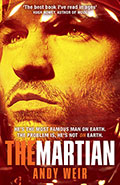
![The MartianAndy Weir]() Science FictionSimilar:
Science FictionSimilar:The Martian is one of those books that if many authors had attempted it, wouldn't have worked. The majority of the novel follows one man surviving on Mars with little more than a shelter, 2 rovers, a few space suits, air, water and potatoes. There are no monsters, no antagonists (unless you count th...
-
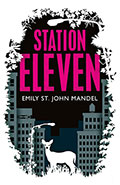
![Station ElevenEmily St. John Mandel]() Science FictionSimilar:
Science FictionSimilar:Day One - The Georgia flu sweeps the globe, a pandemic on a scale not seen before. Reports put the mortality rate at 99%. Week Two and most of Civilisation lies in ruins. Twenty years after the cataclysm and pockets of humanity have rebuilt settlements across the US. Things seem a lot less dangerous...
-
![All the White SpacesAlly Wilkes]() HorrorSimilar:
HorrorSimilar:There are places on the planet that are scary enough on their own. You would never find me plunging the depth of the deepest oceans or spending the night in an abandoned greenhouse somewhere in a wild forest. There are dangers aplenty without any monsters, ghoulies or manifestations. Add to this lis...
-
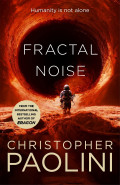
![Fractal NoiseChristopher Paolini]() Science FictionSimilar:
Science FictionSimilar:I have never wanted to travel to space. THUD. Not only would it be physically challenging, but also mentally tough. THUD. The knowledge that the only thing between you and the infinite void is a sheet of metal. THUD. The great expanse making you question your tiny existence and the insignificant lif...
-
![The Dying of the Light: IntervalJason Kristopher]() FantasySimilar:
FantasySimilar:The world has ended and the few who remain are faced with a struggle to survive, not only with a lack of food and heat (not to mention any real form of civilisation) but also against the hordes of shambling undead who look to rip, tear, kill and eat not to mention the possibility of an even more dan...
-
![BarricadeJon Wallace]() Science FictionSimilar:
Science FictionSimilar:The future vision in Barricade shows a world torn apart by a war fought against humanity and their own artificially created super-humans, known as "Ficials". In the UK (seemingly along with the rest of the World) the results are pretty catastrophic. As you can probably imagine once humanity has crea...
-
![Oryx and CrakeMargaret Atwood]() Science FictionSimilar:
Science FictionSimilar:I've been meaning to grab this series for quite some time — the combination of Atwood's evocative prose and a post-apocalyptic setting is a highly promising one. Oryx and Crake tells the story of an altered world through the eyes of a man once known as Jimmy. Now known as Snowman and clothed in dete...
-
![I am LegendRichard Matheson]() Science FictionSimilar:
Science FictionSimilar:I am Legend is a post apocalyptic vision by Richard Matheson, created in 1954 it tells the story of Robert Neville, the last surviving human in the world, surrounded by bloodthirsty vampires - both living and undead. Part of the Gollancz SF Masterworks collection, the novel has received critical acc...
-
![The Last Gifts of the UniverseRiley August]() Science FictionSimilar:
Science FictionSimilar:Subgenres come and go and one that I have recently been enjoying is ‘Cosy Fantasy,’ what does that mean? Basically, fantasy with some of the trepidation taken out, a chance to get to know the characters and enjoy a fantasy setting in peace. Riley August’s The Last Gifts of the Universe opens my worl...
-
![School's Out ForeverScott K Andrews]() Science FictionSimilar:
Science FictionSimilar:Sometimes I feel that reading post-apocalyptic tales are less an escape and more training for the future, after all as a race we aren't doing a great job of preventing this self-destructive outcome. Luckily there is no shortage of literature to teach us about survival in a future wasteland and Schoo...