Frankenstein
By Mary Shelley
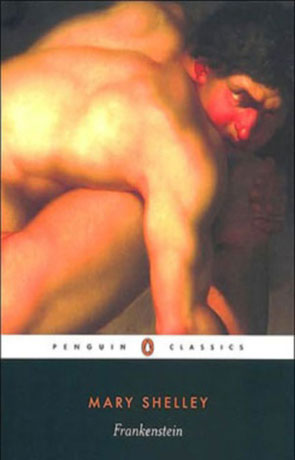
- Frankenstein
-
Author: Mary Shelley
-
Publisher: Not Specified
- ISBN:
- Published: January 1970
- Pages: 328
- Format reviewed: Paperback
- Review date: 12/03/2009
- Language: English
Frankenstein, or The Modern Prometheus, is a novel by Mary Shelley, first published anonymously in London in January 1818. It is a book that almost everyone in the English-speaking world has an opinion on, and a surprising number of them have never read. Most of those opinions are about the wrong character. Frankenstein, in the book, is the scientist. The thing he makes does not have a name. This is the kind of small fact that has been quietly losing ground to popular culture for two centuries, and at this stage the popular culture is winning. We will come back to that.
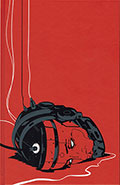
The origin story is almost as well-known as the novel and, unusually for an origin story, all of it is true. In the summer of 1816, the eighteen-year-old Mary Godwin, not yet Shelley, travelled to Lake Geneva with her lover, the married poet Percy Bysshe Shelley, their infant son, and her stepsister Claire Clairmont. They met up with Lord Byron, who had rented a mansion called the Villa Diodati, and Byron's personal physician John Polidori. The summer of 1816 happens to be the famous "year without a summer," a meteorological catastrophe caused by the eruption of Mount Tambora the previous year, which threw enough ash into the atmosphere to drop global temperatures, ruin harvests, and trap a group of bored romantic poets indoors for days at a time. They spent the evenings reading aloud from a French translation of German ghost stories, Fantasmagoriana, until, at some point, Byron proposed they each try to write a better one. Byron lost interest. Percy lost interest. Polidori turned in something that eventually became The Vampyre, effectively founding the modern vampire genre. Mary, after several days of being asked each morning whether she had thought of anything and being forced to say no, had a vision one sleepless night and started writing. By her account, the moment that fixed it was an image: a pale student kneeling beside the thing he had assembled.
She finished the manuscript the following year, at nineteen. The book was published anonymously in January 1818, when she was twenty, with a preface by Percy that led a great many early readers to assume he had written it himself. It was not until the revised third edition, in 1831, that her name appeared on the title page. By then, Polidori was dead by his own hand, Percy had drowned off the coast of Italy in 1822, and Mary was the survivor of a group that had, with the exception of Byron and Claire, more or less destroyed itself within eight years of that wet summer on the lake.
The novel itself is structured as a set of nested confessions, which is one of the things popular culture tends to forget about it. It opens not with Frankenstein but with the letters of Captain Robert Walton, an Arctic explorer writing home to his sister, whose ship picks up a half-dead Victor Frankenstein from the ice. Frankenstein then tells Walton his story, and inside that story, at the centre of the book, the creature tells Frankenstein his. So there are three narrators stacked inside each other, and the most articulate, the most reasonable, and arguably the most sympathetic of the three is the thing Frankenstein made. The creature in the book is not the lumbering inarticulate of the films. He teaches himself to read by listening at the cottage of a blind man and his family. He discovers Paradise Lost and works out exactly which character in it he is. He is given some of the best speeches in the book. The horror, when it comes, is not that the creature is monstrous. It is that he is not, and his creator runs from him anyway.
The subtitle does most of the philosophical work. The Modern Prometheus refers to the Titan who stole fire from the gods to give to humanity and was punished for the gift by being chained to a rock to have his liver eaten daily for eternity. Shelley's point is fairly direct. Frankenstein steals the divine prerogative of making life, refuses any responsibility for what he has made, and is duly punished, though in his case the punishment is meted out by the creation itself rather than by an eagle. The novel is usually described as the first work of science fiction, and the case for that is strong. It is not about magic or curses. The animating force is electricity and chemistry, the contemporary frontier science of the Romantic period, and the moral pressure of the book is about what scientific overreach does to the people who attempt it and the people who have to live with the results. Almost every story about a scientist who makes a thing he should not have made traces a line back to this book, and the genre even has a name for it. The Mad Scientist. Frankenstein invented him.
The film history is its own object, and worth a paragraph because the films are responsible for almost everything most people think they know. The first screen adaptation was made by Edison Productions in 1910, written and directed by J. Searle Dawley, and ran a little over twelve minutes. The creature appears out of a vat of boiling chemicals in a sequence that was, by the standards of 1910, genuinely unnerving. Twenty-one years later came the version everyone is actually thinking of when they say "Frankenstein": the 1931 Universal film directed by James Whale, with Boris Karloff under Jack Pierce's makeup, the flat head, the neck bolts, the heavy lids. That film and its sequels gave us the iconography. They also gave us the misnomer. Karloff's creature is the one most people are picturing when they call the creature "Frankenstein," and they have been doing it for so long that the dictionaries have given up and now list the usage as acceptable. The book quietly disagrees.
What survives all of this, after the films and the cereal-box knockoffs and the Halloween costumes and the two centuries of misattribution, is the novel itself, which is shorter and stranger and more philosophical than its reputation suggests. It is a book about parenthood, about the duties owed to something you have brought into the world. It is a book about loneliness, told mostly by lonely men. It is a book by an eighteen-year-old that has outlasted almost everything written by older and more confident hands in the same period. The thing Mary Godwin saw in her sleepless vision on Lake Geneva turned out to be one of the most durable images in literature, and after two hundred years it still belongs to her and not to Universal Pictures, even if the pitchfork-and-torch crowd has not entirely been informed.
Written on 12th March 2009 by Ant .
Topics and themes
Key Tropes
Tone & Pace
Themes
General
You may also like