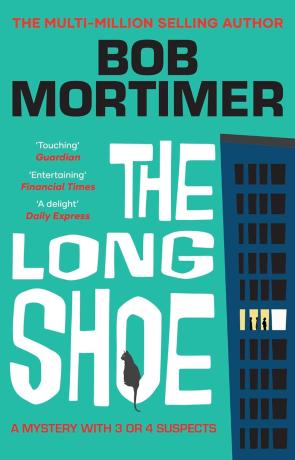
The Long Shoe
By Bob Mortimer
- The Long Shoe
-
Author: Bob Mortimer
-
Publisher:
- ISBN: 9781398548046
- Published: September 2025
- Pages: 336
- Format reviewed: Hardback
- Review date: 29/08/2026
- Language: English
I have a confession to make before we start. I came to Bob Mortimer's third novel slightly worried that I had run out of things to say about Bob Mortimer.
This is the danger of reviewing a number of the author's books in a short space of time. By the third outing, you have already spent your best lines on the prose, already made your peace with the squirrels, already explained, twice, that the man is funnier than he has any right to be and sadder underneath it than anyone expects. So I opened The Long Shoe half braced to write the same review for a third time, and I am pleased to report that the book had other ideas. Not entirely different ones, mind. But enough.
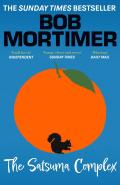
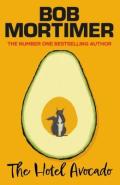
For the uninitiated, a little background. Mortimer needs no introduction as half of Reeves and Mortimer, or as the gentlest man ever to fall asleep in a deckchair on Gone Fishing, but his late swerve into fiction remains one of the genuine surprises of recent years. The Satsuma Complex won the Bollinger Everyman Wodehouse Prize and sold by the lorryload. The Hotel Avocado went straight to number one. Two million copies later, here is the third.
The Long Shoe is a new standalone; Gary Thorn is gone. So is Grace, so is Peckham, so is the whole returning cast that the first two books leaned on so fondly. In their place we have Matt, a bathroom salesman who has lost his job, is about to lose his flat, and has just lost his girlfriend Harriet, who has reached the end of her patience watching him fail to do anything about any of it. You can come to this book having read nothing else by Mortimer and lose precisely nothing, which is more than the jacket of The Hotel Avocado could honestly have claimed. A new name is not the same as a new man, though. Matt is Gary in a different coat. Same anxiety, same kindliness, same fatal inability to act until the world acts upon him first. The building he moves into is even called Satsuma Heights, a wink so broad it practically elbows you in the ribs. So while the book stands alone, the sensibility behind it does not, and that is the thing worth talking about.
The setup, I am glad to say, has more of an engine to it than last time. Matt is offered a rescue: a job that comes with a free luxury flat, and one small condition, which is that he keep a quiet eye on his new neighbours for the building's eccentric owner. He drifts into it the way Matt drifts into everything. Then it starts to dawn on him that Harriet may not have left of her own accord, and the drift hardens into something with actual stakes.
After the "will he, won't he move to Brighton" tension of The Hotel Avocado, which was about as low as dramatic stakes can go without flatlining, this is a sturdier spine, and the book moves better for it. Where the second novel sometimes sat with a wheel spinning in the mud, this one keeps its momentum.
But you do not really come to a Mortimer novel for the plot. You come for the people loitering at the edges of it.
And here he remains untouchable. The plot is a washing line; the supporting cast is the washing; and the washing is glorious. There is, I am sorry to report, no way of describing a character called Goodmonson that improves on simply telling you he is called Goodmonson. There is Hot Dog, who renames Matt "Jigsaw", because he thinks Matt looks more like a Jigsaw player than a Darts one. There is Carol, a flirtatious older neighbour drawn with such appalling precision that you can practically smell the perfume coming off the page.
These are bits, really, sketches in search of a sketch show. But Mortimer loves his creations too much to leave them as bits, and so they accrue a wonky, accidental humanity as they go. If you read these books for the company (and you should), the company is as good as it has ever been.
A word, though, about the thing that will decide whether these books are for you at all. Mortimer is an improviser to his marrow, and the riffs are not a detour from the novel; they are the novel. There is an exchange about whether a vape is vanilla and potato when it turns out to be raspberry and coconut, and it has almost nothing to do with anything, and it is wonderful, and it is also exactly the sort of thing that makes a certain kind of reader hurl the book across the room. This is the whole proposition. You are not buying a tightly sprung plot with some jokes layered on top. You are buying the jokes, the digressions, the two pages spent litigating something gloriously beside the point, and the thin story strung between them to keep it all hanging up. You are essentially buying some personal time with Bob, in written form.
If that sounds like an ordeal, this is not your book, and I would not try to argue you round. But if it sounds like a pleasure (and to me it nearly always does), then you already know that the floating-off-the-plot business is the feature, not the fault. Mortimer has been doing this on television for forty years. He is simply doing it on paper now.
Whether that charms or maddens you depends entirely on how badly you want to be inside Mortimer's head. I should be honest. I usually do.
What disarmed me, though, was how knowing the whole thing is about its own tricks. The talking-animal conceit that split readers of the first book, and grew a pigeon in the second, is handled differently this time, in a way I will not spoil but which strongly suggests Mortimer has clocked that it had become a crutch and decided to do something about it.
That self-awareness runs all the way through. The sharper reviewers of the earlier books caught the sense that Mortimer never quite inhabits his characters so much as stands just behind them doing a bit, gently making fun of them, and of you, in the same breath. By book three this has stopped feeling like a limitation and started feeling like the actual offer on the table. Again, because this is worth repeating, you are not really reading a novel. You are spending a few hours with a comic sensibility that has agreed, for your benefit, to wear a novel's clothes.
And yet. Underneath all the nonsense, the thing that has always lifted Mortimer clear of the celebrity-novelist pack is still quietly doing its work.
He is genuinely good on loneliness. Scrape the jokes off this missing-person story and what is left is a man who only understands how much he loved someone once she is gone and possibly in danger. It is the same ache that powered Gary's paralysis in the earlier books, handled with a touch light enough that it never curdles into sentiment. The comedy is the surface. The loneliness is the depth. The book is at its most truthful when it lets the two share a single sentence.
Mortimer writes the terror of choosing a life, or failing to choose one, far better than he writes the crime caper he keeps draping over the top of it. And he plainly knows which is which.
As a mystery, it works, and rather better than The Hotel Avocado did, with a twist or two that almost caught me off guard and a payoff to the long shoe of the title that delighted me in its sheer daftness. But let us be clear about the register. This is cosy crime, a shaggy-dog story rather than a thriller, and any reader turning up in search of tight plotting will be as gently baffled as they would have been by either of the first two. The pleasures are textural, not architectural. You are here for the people, not the puzzle.
So where does that leave a standalone third novel?
The Long Shoe is better plotted than The Hotel Avocado and less surprising than The Satsuma Complex, which is more or less the trade you would expect from a writer who has stopped trying to startle you and grown content to feed you well instead. The jacket promises an evolution of his style. What it actually delivers is a consolidation of it, the same recipe cooked a third time by a man who now knows his own kitchen rather well.
For the converted, that is no complaint at all. For everyone else, I would still gently steer you back to The Satsuma Complex, where the surprise was sharpest, and the formula was not yet a formula. Though as a genuine front door, free of the old cast, this one will do the job perfectly well.
As for me? I spent a few hundred pages in Matt's hapless, decent company. I laughed out loud more than once. And I closed the book with the same grin the first two put on my face, a little more crooked, perhaps, for knowing the trick of it now, but no less wide for that.
The surprise has gone, and it was never coming back; you cannot be ambushed by the same man three times. But Mortimer has quietly swapped surprise for something steadier, a writer who knows exactly what he does well and does it without fuss. That is not a diminished thing. It is just a different one, and on this evidence I would happily walk through his front door a fourth time.
Written on 29th August 2026 by Ant .
Topics and themes
Key Tropes
Tone & Pace
Themes
Setting
Content/Warnings
General
You may also like
-
![SpankyChristopher Fowler]() HorrorSimilar:
HorrorSimilar:This is the first book I have read by this author, not somebody I had ever heard of. To my surprise I discovered a large catalogue of books he has written, most of which are very popular in their own right and it is at times like these I question what I have been reading these last thirty odd years....
-
![NodAdrian Barnes]() Science FictionSimilar:
Science FictionSimilar:Like all the best novels, Nod develops from a simple premise. Imagine that the vast majority of people around the world suddenly stopped being able to sleep. No deep sleep, no cat-naps and no snoozing at all. It's only a matter of time before society collapses. How many times have we had a bad night...
-
![ScalesChristopher Hinz]() Science FictionSimilar:
Science FictionSimilar:War, what is it good for? Not a lot, but depressingly it is a real driver of innovation. What better way to inspire the greatest minds in the country than to task them with more efficient ways to kill the enemy? Arms races happen all over the place from conventional gun and bullets to newer types of...
-
![The Return of the Incredible Exploding ManDave Hutchinson]() Science FictionSimilar:
Science FictionSimilar:Failed science writer Alex Dolan is just floating along, struggling to find work when multi-billionaire Stanislaw Clayton provides a surprising, well-paid offer out of the blue. He wants Alex to write a book about the world's first privately funded high-energy physics facility - the Sioux Crossing S...
-
![PoeJ Lincoln Fenn]() HorrorSimilar:
HorrorSimilar:23-year-old Dimitri Petrov makes a living writing obituaries, but on Halloween he gets a last-minute assignment to cover a séance at the haunted Aspinwall Mansion. There he meets Lisa, a punk-rock drummer who works at the local nursing home, and promptly falls for her. But right as he’s trying to wo...
-
![The Yiddish Policemen's UnionMichael Chabon]() Science FictionSimilar:
Science FictionSimilar:I have a sort of self imposed resolution to read all of the books that have won a Hugo award and to be honest this is the only reason I first picked up this book. I haven't read anything else by the author although I am of course aware of him, however as a more "literary" author he's not someone who...
-
![Police at the Station and They Don't Look FriendlyAdrian McKinty]() General FictionSimilar:
General FictionSimilar:There are times in history that don’t seem very funny and if you lived through them you would find it hard to laugh. The 1970/80s in Northern Ireland may just be one such era as sectarian violence means that you are always wary of your surroundings. This is exemplified for Detective Inspector Sean D...
-
![The Satsuma ComplexBob Mortimer]() General FictionSimilar:
General FictionSimilar:There is a nervousness that descends when a beloved celebrity, especially a comedian, announces they have written a book. We have all been burned before and will probably continue to be (I still haven't been able to finish reading The Book of Elsewhere ). The celebrity novel is a well-established ge...
-
![The Hotel AvocadoBob Mortimer]() General FictionSimilar:
General FictionSimilar:Welcome to the Hotel Avocado , such a lovely book; is something The Eagles might have said, had they known Bob Mortimer was writing again. When I reviewed The Satsuma Complex I came to it braced for disappointment and left it grinning like an idiot, having been thoroughly disarmed by a debut that ha...
-
![The Shadow of HeavenBob Shaw]() Science FictionSimilar:
Science FictionSimilar:The Shadow of Heaven is a science fiction novel by Bob Shaw. First copyrighted 1969, this "terrifying novel of the future" is surprisingly unjaded by time. In The Shadow of Heaven, World War III isn't the nuclear inferno as must feared at the time, but something a lot closer to what we fear today. A...