Eve, The Burning Life
By Hjalti Danielsson
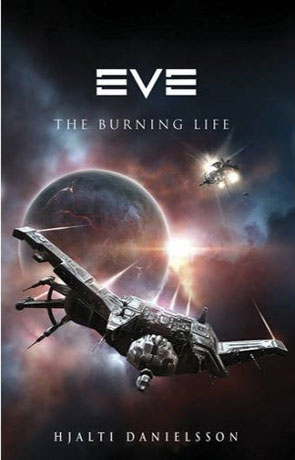
- Eve, The Burning Life
-
Author: Hjalti Danielsson
-
Publisher: Allen and Unwin
- ISBN:
- Published: November 2009
- Pages: 400
- Format reviewed: Hardback
- Review date: 01/11/2009
- Language: English
- Age Range: N/A
Tie-in fiction carries a peculiar burden. It must satisfy the faithful who already know the world inside out, while remaining legible to the newcomer who has never touched the source material; and it must do both without ever quite escaping the suspicion that it exists to sell something else. Eve, The Burning Life sets itself an even steeper climb, because the world it draws on is one of the coldest and most player-driven settings in modern science fiction, a place where story has traditionally been something players make rather than something they are told.
Hjalti Danielsson is about as well placed as anyone to attempt it. As CCP's lead narrative creator (and known to the Eve Online community by his developer handle, Abraxas), he has spent years filling in the sociopolitical texture that the game itself tends to leave implied: the factions, the faiths, the hatreds. He came to the role after a spell as a Game Master, reportedly the only job in the world where customers routinely demand the return of their spaceships, and he has written something in the region of eighty short stories and a couple of performed plays set in this universe. The Burning Life is his first novel, and the second to emerge from the franchise. If anyone holds the keys to New Eden, it is him; which makes it all the more curious that the book so rarely throws the doors fully open.
The premise is a strong one, and cleverly chosen. Rather than putting us in the cockpit alongside the capsuleers, the immortal pilots who string the Intergalactic empire together, Danielsson turns his attention to the mortals who live and die in their shadow. The capsuleers are cold, remote, descended from humanity but no longer quite of it; they are needed and they are loathed in equal measure. It is a smart inversion, because in the game these are the players themselves, and the people they routinely vaporise are barely more than loot dispensers and target locks. The Burning Life asks what those people might think of us.
Two of them carry the book. Drem is the sole survivor of a capsuleer attack on his deep-space mining colony, a member of the religiously devout Blood Raiders left raging at a technicality that bars his murdered brother's name from the Book of the Dead. His response is the only one his grief can reach for: to put a price on the head of the pilot who did it, an impossible revenge against an immortal. Ralea, in another corner of the galaxy, is a mission agent, a wealthy broker of the very contracts that send capsuleers out to kill, and her self-loathing runs as deep as Drem's grief. He seeks revenge; she seeks redemption; and the enigmatic Sisters of Eve, a philanthropic rescue order spanning the known worlds, hold the thread that will eventually draw them together.
The two strands are the book's most interesting idea and, frustratingly, its central problem. Held side by side, Drem and Ralea form a deliberate study in contrasts, his vengeance against her flight from vice and guilt, and an attentive reader can find real pleasure in mapping one against the other. But the strands remain stubbornly separate for most of the novel's length, and the connection that the setup promises arrives so late, and so abruptly, that it reads less like a convergence than a hasty stitch. The structure betrays its origins: this is a writer of short stories reaching for the longer form, and the seams show. Either of these journeys, given the whole book to breathe, might have become the story it deserved to be. Granted both, neither quite does.
The characters suffer for it. Drem and Ralea too often function as guided tours rather than people, vehicles for ferrying the reader past the faiths and factions of New Eden, each culture introduced and then left behind before it can take root. There is a tendency to tell us who people are through labels rather than to let their actions prove it, and the emotional register can feel broad, with love and hatred signalled in strokes rather than earned. Where the world does come alive, it tends to be in the darker corners, the horror-tinged dread of Sansha's Nation among them, and these passages hint at the richer book this might have been had Danielsson lingered.
His prose divides opinion sharply, and it is worth being honest that readers have landed on opposite sides of it. To some it is clean, fuss-free and genuinely easy to read, an impressive flow for a debut. To others it betrays the same impatience as the structure, swinging between over-narration and thin dialogue, leaning on coarse language and repeated phrasing where precision would have served better. Both reactions are fair, and they probably tell you something true: this is competent, readable prose that rarely reaches for the poetic and occasionally would have benefited from a firmer edit.
The pacing compounds the issue. Much of the book proceeds at a steady, even plodding tread, and then the ending arrives in a rush. The climax itself draws genuine praise, even from less forgiving readers, as a striking and unexpected turn; but it is reached too quickly, the long, patient build given too little room to pay off. It is the recurring frustration of the whole novel in miniature: real ambition, real flashes of quality, undercut by the sense that there was never quite enough time or space to do any of it justice.
So where does that leave Eve, The Burning Life? It is more than a cynical cash-in, and considerably more thoughtful than tie-in fiction is often given credit for. Danielsson clearly loves this universe and has chosen the most interesting possible vantage point from which to show it to us. The ideas are good, the premise is genuinely fresh, and there are moments here that suggest a real novelist finding his feet. But ambition outpaces execution. The book bites off more than it can comfortably chew, and the result is a novel that gestures at greatness without ever fully arriving. Newcomers to New Eden may find it an intriguing way in; existing pilots will likely get the most from it, filling the silhouettes the game leaves blank. For everyone else, it is a flawed but honourable attempt at a genuinely difficult thing, and one that leaves you curious about what its author might do next with a little more room to breathe.
Written on 1st November 2009 by Ant .
Topics and themes
Key Tropes
Tone & Pace
Themes
Setting
Content/Warnings
General
You may also like